Korean Snacks: 25 Popular Korean Snacks to Discover
· 7 min read · Flourish Snacks Bites
Korean snacks offer more than a choice between spicy and sweet. There are chewy rice cakes, crisp seaweed sheets, warm griddle pancakes, filled buns and iced desserts. Some are small street-food portions; others are foods normally shared as part of a larger meal. This guide introduces 25 examples without ranking them or suggesting that one recipe represents all of Korea. Names may be romanised differently on menus and packages. Start with the texture and main ingredients, then ask the seller about filling, spice and allergens. That is often more useful than trying to memorise every spelling before your first visit.
What to check before buying
Rice-based does not automatically mean gluten-free, and vegetable-looking fillings may still include fish, meat or egg. Wheat can appear in sauces and coatings; sesame, soy, milk and seafood are also common considerations. Packaged sweets and fresh street snacks are different experiences, so try both if they suit you. For background on dishes and food culture, the Korea Tourism Organization offers an official starting point. The descriptions below are food introductions, not claims that every shop uses a standard recipe or that every snack is sold locally in Regina.
25 ideas to explore
1. Hotteok
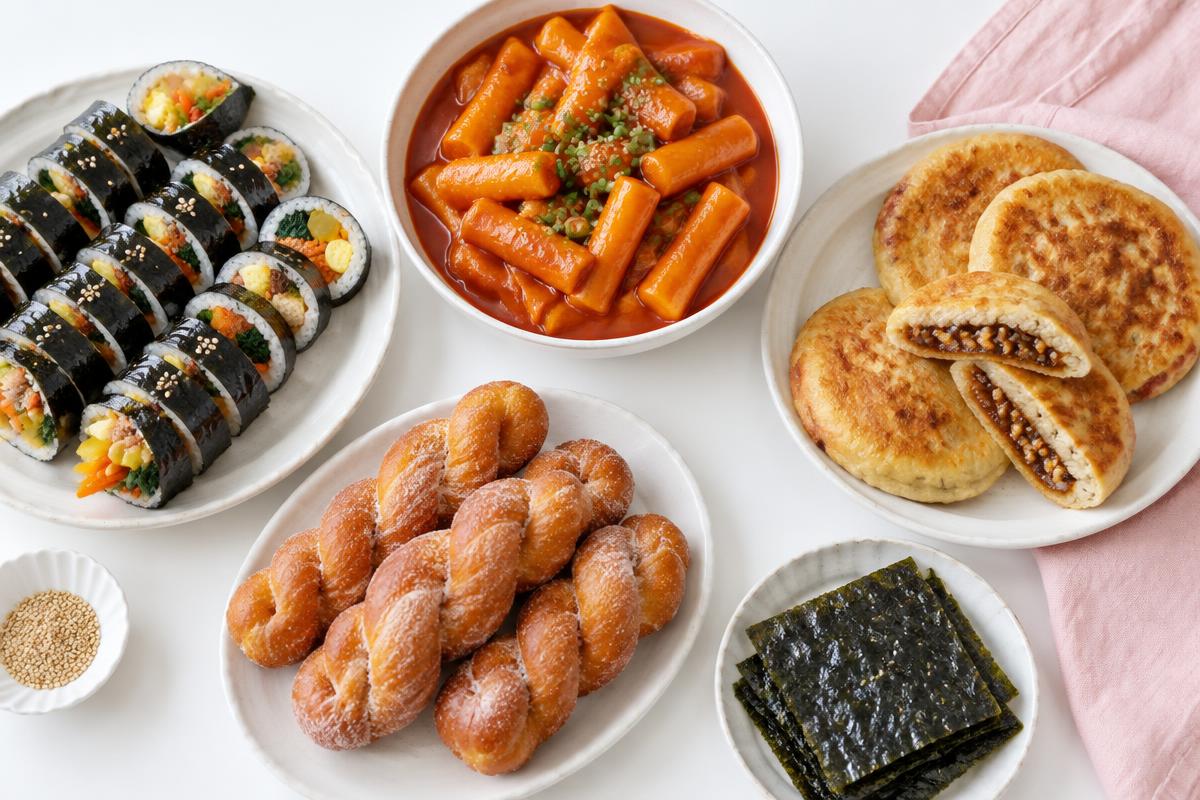
These griddle-cooked pancakes commonly contain a brown-sugar filling with nuts or seeds and cinnamon, although savoury versions exist. The filling can be much hotter than the outside. Let a freshly cooked pancake cool a little before biting into its centre.
2. Bungeoppang
A fish-shaped pastry commonly filled with sweet red-bean paste is named for its shape rather than fish content. Custard and other fillings are also sold. Ask which filling is inside and check wheat, egg and milk ingredients rather than judging by appearance.
3. Gyeran-ppang
This small baked bread contains an egg and is often eaten warm. It can taste mildly sweet as well as savoury. Treat it as a fresh cooked-egg food: buy from a suitable source, eat promptly or refrigerate according to safe handling guidance.
4. Kkwabaegi
Twisted fried doughnuts have a soft interior and usually a light sugar coating. The braid gives them a distinctive shape without a heavy topping. A small piece is a straightforward first taste if you prefer mild sweetness to filled pastries.
5. Tteokbokki
Chewy rice cakes in a seasoned sauce are a familiar street-food dish. Red versions are often spicy, but sauces and accompaniments vary. Fish cakes may be included, and sauce can contain wheat or seafood; ask rather than assuming it is vegan.
6. Gimbap
Seaweed-wrapped rice rolls contain fillings such as vegetables, egg, meat or pickled radish. Snack-sized slices are easy to share. They are not automatically vegetarian, and prepared rice with perishable fillings should be handled as refrigerated food when kept for later.
7. Mandu
Korean dumplings may be steamed, boiled or fried and filled with vegetables, meat or kimchi. Wrappers and fillings differ by maker. A small portion is filling enough to function as a snack, but dipping sauce can add considerable salt.
8. Gim
Roasted or seasoned seaweed sheets offer a delicate crisp texture and are often sold in small packages. They soften quickly after opening in humid conditions. Check oil, salt and seasoning ingredients, and reseal unused sheets rather than leaving them exposed.
9. Eomuk skewers
Fish-cake pieces on skewers are commonly served warm with broth. The fish cake may also contain flour and other ingredients. Seafood allergies and sodium content need attention, and broth plus dipping sauce can make the overall serving saltier than expected.
10. Twigim
This broad term covers fried bites such as vegetables, squid or other battered ingredients. The word does not specify one filling. Choose a small mixed portion and ask what each piece contains; shared frying oil can matter for allergies and dietary restrictions.
11. Gimmari
Seaweed rolls filled with glass noodles are coated and fried for a crunchy outside. They are often served beside tteokbokki. The noodles alone do not tell you whether the coating or seasoning contains wheat, so check the whole preparation.
12. Dakgangjeong
Small fried chicken pieces coated in a sweet-savoury glaze provide crunch and strong flavour. Nuts may appear as a garnish, and some sauces are spicy. For a tasting portion, share a small dish rather than assuming the glazed pieces are a light food.
13. Korean-style corn dogs
These coated skewered snacks can contain sausage, cheese or both, with toppings varying between vendors. Some have potato pieces outside. Ask about the centre before ordering, and allow melted cheese to cool so the first bite is not painfully hot.
14. Gunbam
Roasted chestnuts offer a gently sweet, floury texture and are especially associated with cooler weather. They differ considerably from crunchy roasted peanuts. Peel carefully, let them cool enough to handle and check storage guidance if saving cooked chestnuts.
15. Gun-goguma
Roasted sweet potatoes are a simple warm option with a soft interior and naturally sweet flavour. They need no elaborate sauce to be enjoyable. Split a larger potato to make a snack portion, and refrigerate cooked leftovers rather than storing them indefinitely at room temperature.
16. Tteok
Tteok is a broad family of rice cakes, not one fixed snack. Some are steamed, others shaped or filled, and textures can be dense and chewy. Ask for the specific variety; the chewiness may be unsuitable for someone with swallowing difficulties.
17. Injeolmi
These chewy rice cakes are commonly dusted with roasted soybean powder. Their understated sweetness is part of the appeal. Soy is an important ingredient to identify, and rice flour does not remove concerns about cross-contact or other recipe ingredients.
18. Songpyeon
Small shaped rice cakes associated with Chuseok can have fillings such as sesame or sweet beans. Shapes and fillings vary. Try a small portion and ask what is inside; the smooth exterior hides ingredients that may matter for allergies.
19. Yakgwa
A fried, syrup-soaked confection commonly made with wheat flour offers a dense, rich sweetness. Honey or other sweeteners may be used. It is worth tasting slowly in a small portion rather than expecting the texture of a crisp everyday biscuit.
20. Yaksik
Sweet seasoned sticky rice with ingredients such as chestnuts and dried fruit can be cut into portions. Recipes may include soy sauce and nuts. It is more substantial than its small shape suggests, so check ingredients and adjust the portion to your appetite.
21. Hodu-gwaja
Walnut-shaped pastries commonly include a sweet bean filling and walnut. The shape gives a clue to the nut association, but not a complete ingredient list. These suit sharing in small portions; confirm nuts, wheat, milk and egg if needed.
22. Danpat-ppang
A soft bun filled with sweet red-bean paste provides a bakery-style contrast to fried snacks. The paste can be smooth or slightly textured. Ask whether the dough includes milk or egg, and use the bakery’s storage advice for filled bread.
23. Soboro-ppang
This bun has a crumbly, streusel-like topping, often with a nutty flavour depending on the recipe. It is not the same as a filled red-bean bun. Peanut ingredients may occur, so a visible crumb topping should not be treated as plain bread.
24. Bingsu
Shaved-ice desserts may be topped with beans, fruit, milk-based ingredients or other sweets. A large bowl is often shared. Ask about the base as well as toppings; fruit on top does not make a milk-based dessert dairy-free.
25. Packaged biscuit and rice-snack varieties
Korean grocery shelves carry coated biscuit sticks, rice crackers and filled sweets in many flavours. Choose one small package to explore rather than treating a brand as a whole cuisine. Read the translated ingredients and storage instructions; formulations can change.
A first tasting that covers different textures
For a small introduction, choose hotteok for warmth, gimbap for a savoury rice option, gim for crunch and a small rice cake for chewiness. You do not need all four on the same day. Buying freshly prepared food from a suitable shop can be more informative than trying an unfamiliar recipe without a reference point. Notice how the same ingredient, rice, behaves differently in a roll and a cake. Explore another set of textures in our Filipino snacks guide.
Storage, sourcing and expectations
Fresh fillings, cooked rice and dairy desserts need different handling from sealed dry snacks. Follow the seller’s instructions and Health Canada food safety guidance. This list does not promise local availability or identify a particular business as a supplier. For official cultural context, consult the Korea Tourism Organization; package labels remain the source for the exact product you purchase. A food name alone cannot establish its ingredients, sodium content or suitability for your diet.
A note from our kitchen
If you are unsure where to start, ask for one warm snack and one mild packaged option. Learning whether you like a chewy, crisp or fluffy texture makes the next choice easier. Curiosity is enough; you do not need to claim expertise to enjoy something new.
— Flourish Snacks Bites
Looking for Nigerian snacks in Regina?
Flourish Snacks Bites makes Nigerian snacks for pickup or local delivery. This guide is general food information, not our product menu or a dietary certification.