High-Protein Low-Calorie Snacks: 25 Ideas to Try
· 8 min read · Flourish Snacks Bites
This guide starts in the supermarket rather than the meal-prep container. When several snacks promise protein, the useful comparison is the entire serving: protein, total energy, ingredients, sodium, price and whether you like the food. The phrase high-protein low-calorie is common in searches, but those are separate regulated claims, not interchangeable promises. The 25 options below are candidates to evaluate, not a certified list meeting both claims. Many substantial protein snacks do not meet a formal low-calorie threshold. For assembly and packing ideas instead of product comparison, use our protein snack preparation guide.
Compare like with like
First align serving sizes. A tiny scoop and a full tub cannot be compared fairly just by reading the front number. Then look at protein and energy together, alongside sodium, sugars and ingredients relevant to you. In Canada, protein claims include specific requirements rather than one simple gram rule; see Health Canada’s permitted nutrient-content claims table. In the US, 21 CFR 101.54 and related rules govern nutrient claims. Do not copy US eligibility assumptions onto a Canadian package.
Avoid a misleading protein-per-calorie contest
A useful snack is not automatically the product with the highest protein-to-energy ratio. Beans contribute fibre and carbohydrate; nuts provide fat and texture; a yogurt may be easier to eat than a supplement. Some people need more energy, not less. If you have kidney disease or another condition affecting protein needs, follow individual advice. Canada’s Food Guide supports varied protein foods within a complete eating pattern. Comparing labels is a decision aid, not a prescription to maximise protein at every snack.
25 ideas to explore
1. Plain Greek yogurt
Compare protein, total energy and serving size across plain varieties. Full-fat and lower-fat versions differ, and flavoured versions may add sugar. Choose the one that suits your appetite rather than assuming strained yogurt automatically qualifies for every claim in this guide.
2. Skyr-style yogurt
These cultured products are often sold with prominent protein wording, but the label still matters. Check whether the tub is one serving and whether it is sweetened. Texture and price can be as important as a small difference in protein.
3. Cottage cheese
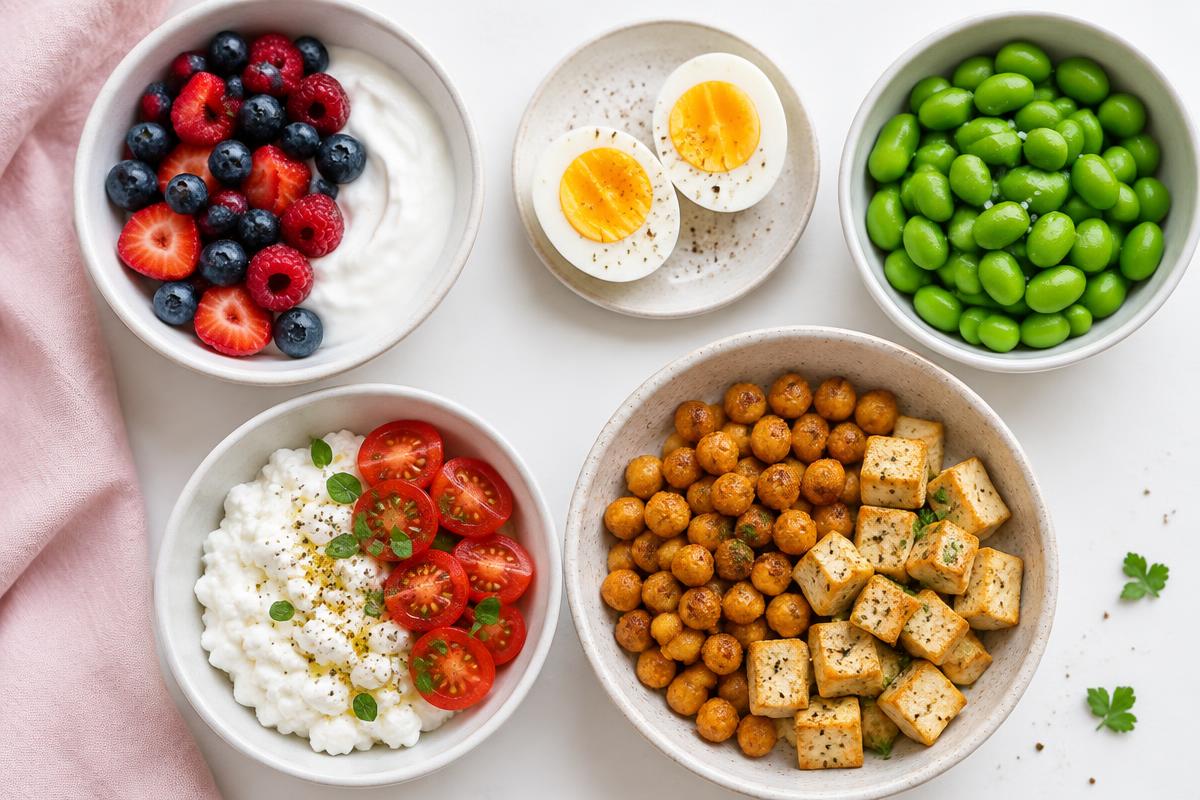
Compare protein alongside sodium, which may be substantial in some products. Low-fat wording is not a low-sodium or low-calorie guarantee. A serving with fruit or crackers should be evaluated as the full combination, not only the cheese.
4. Plain kefir
Check the protein and energy in the amount you actually drink, not an arbitrary small reference portion. Flavoured kefir may differ greatly from plain versions. If drinking a snack leaves you hungry, a solid option may be more practical.
5. High-protein milk products
Some milk products are filtered or formulated to contain more protein. Compare ingredients, serving size and cost with ordinary milk. A special process is not proof the drink meets a low-calorie claim or that you personally need the extra protein.
6. Soy drink
Unsweetened soy drinks can provide a plant-based protein option, but brands vary. Compare protein, fortification and energy on the actual carton. Almond and oat drinks are not automatic nutritional substitutes merely because they share the same shelf.
7. Soy yogurt
Read the protein amount rather than assuming every plant yogurt is substantial. Added sugar and fat vary. A product can be vegan and still contain little protein, so the ingredient choice and the nutrient comparison are separate questions.
8. Whole eggs
An egg supplies several nutrients as well as protein and energy. It is not calorie-free and need not be treated as inferior solely because it includes a yolk. Choose a suitable portion and consider the accompaniments you normally add.
9. Egg-white products
These may concentrate protein relative to energy compared with whole eggs, but preparation ingredients matter. Check additives and cooking instructions. Oil, cheese and other additions can change the finished serving more than the difference between two cartons.
10. Cooked chicken breast
Plain cooked chicken differs from breaded, glazed or heavily seasoned versions. Compare the product you will actually eat. Sauce, bread and dressing count in the whole snack, while safe cooking and refrigeration matter independently of nutrition.
11. Cooked turkey
Turkey products range from plain cooked meat to processed deli slices. Read sodium and added ingredients as well as protein. A lean-sounding name is not enough information to judge a pre-seasoned package or sandwich filling.
12. Water-packed tuna
Check sodium and the drained or undrained serving basis on the label. Water-packed does not necessarily mean no added salt. Tuna with crackers or mayonnaise is a different combination from plain tuna, so compare the full portion.
13. Cooked salmon
Salmon supplies protein and fat, making it different from some very lean options. That does not make it a poor snack choice. Consider portion, preparation and your broader eating pattern rather than ranking fish only by calories.
14. Cooked shrimp
Plain cooked shrimp differs from breaded shrimp or a serving with sweet cocktail sauce. Seafood can be a practical protein option for some people, but allergy and cold-storage needs remain. Compare ready-to-eat products carefully instead of assuming all packages are plain.
15. Firm tofu
Tofu type affects water content and protein per serving. Firm and silken products may not compare directly by volume. Read the package and include frying oil or marinade if evaluating a prepared snack rather than the uncooked base.
16. Silken tofu
A soft tofu can work in a dip or bowl, but its protein amount may differ from firm tofu. Do not borrow nutrition figures from another type. A sweet pudding made with it also includes other ingredients, which change the total energy.
17. Tempeh
Tempeh offers a firmer fermented-soy option, with protein, fat and carbohydrate all contributing to its profile. Read the label and preparation instructions. A fried or sweet-glazed version is not equivalent to the plain product used for a comparison.
18. Edamame
Shelled edamame provides protein alongside carbohydrate and fibre. Check whether the label refers to beans alone or pods, and whether seasoning has been added. An honest comparison needs the edible portion you actually consume.
19. Cooked lentils
Lentils provide more than protein, including carbohydrate and fibre. They may not win a protein-per-calorie contest against very lean meat, yet can be useful and affordable. Consider texture, satiety and how you eat them instead of dismissing them by one ratio.
20. Chickpeas
Plain cooked chickpeas, roasted snacks and hummus are different products. Added oil, sesame and seasonings change the energy and sodium. Compare the actual preparation and serving rather than treating a chickpea ingredient as a complete nutritional description.
21. Beans
Canned and home-cooked beans can be practical protein-containing foods. Check added salt and sauce, and compare a realistic portion. Rinsing may affect sodium but does not give you a precise new nutrition value without appropriate information.
22. Nuts and seeds
These contain protein but are also energy-dense, often making them unsuitable for a strict low-calorie claim. A small portion can still be useful. Plain nuts differ from coated clusters, and their value is not limited to the protein number.
23. Jerky
Jerky can show substantial protein in a portable pack, while sodium and added sugar deserve attention. Compare the entire bag if you eat it all. Chewing texture, storage after opening and cost matter alongside the front-of-pack protein claim.
24. Protein bars
Check total energy, serving size, ingredients and whether the taste is worth the price. Some bars are closer to a substantial small meal than a light snack. A large protein number does not automatically qualify the product as low calorie.
25. Protein powders and ready-made shakes
These can be convenient for specific needs, but ordinary food may also do the job. Compare the prepared drink, including milk or other additions, not just one scoop. Seek professional advice if medical conditions affect protein targets or supplement suitability.
A fair shopping comparison in five steps
Choose two products serving the same purpose. Align the serving size or compare the amounts you realistically eat. Read protein and energy, then sodium, sugar and ingredients important to you. Include additions such as crackers or milk. Finally compare price and whether you enjoy the product. This avoids treating a supplement scoop and a complete yogurt bowl as if they are the same snack. For bulk purchases, our Costco shopping guide adds storage and waste considerations to the label comparison.
What the numbers cannot promise
No snack guarantees weight loss, fullness for a fixed number of hours or a particular muscle result. Protein and energy needs depend on the person and whole eating pattern. This guide uses Canada’s Food Guide and Health Canada’s nutrient-claim table for general context and label distinctions. It does not invent nutrition figures for unmeasured recipes. Use our preparation guide when you want practical combinations, and consult a registered dietitian for personal targets.
A note from our kitchen
The label should help you choose, not turn every snack into a competition. If two options both suit your needs, the one you enjoy, can afford and will actually eat is often the more useful purchase. Keep the whole serving in view, including its toppings.
— Flourish Snacks Bites
Looking for Nigerian snacks in Regina?
Flourish Snacks Bites makes Nigerian snacks for pickup or local delivery. This guide is general food information, not our product menu or a dietary certification.