Low-Calorie High-Protein Snacks: 25 Smart Snack Ideas
· 8 min read · Flourish Snacks Bites
This guide is for the practical part of snack planning: preparing something protein-containing before you are hungry and keeping the additions manageable. It differs from our companion label-comparison guide by focusing on assembly, packing and small-batch preparation. The familiar phrase low-calorie high-protein describes the search topic, not a certification of these unanalysed combinations. Most useful protein snacks contain meaningful energy, and many would not meet the strict legal definition of a low-calorie claim. Exact values depend on brand, ingredients and portion. Use these 25 ideas as a starting point, and read the labels when you need a particular protein or energy amount.
Start with a base, then choose an addition
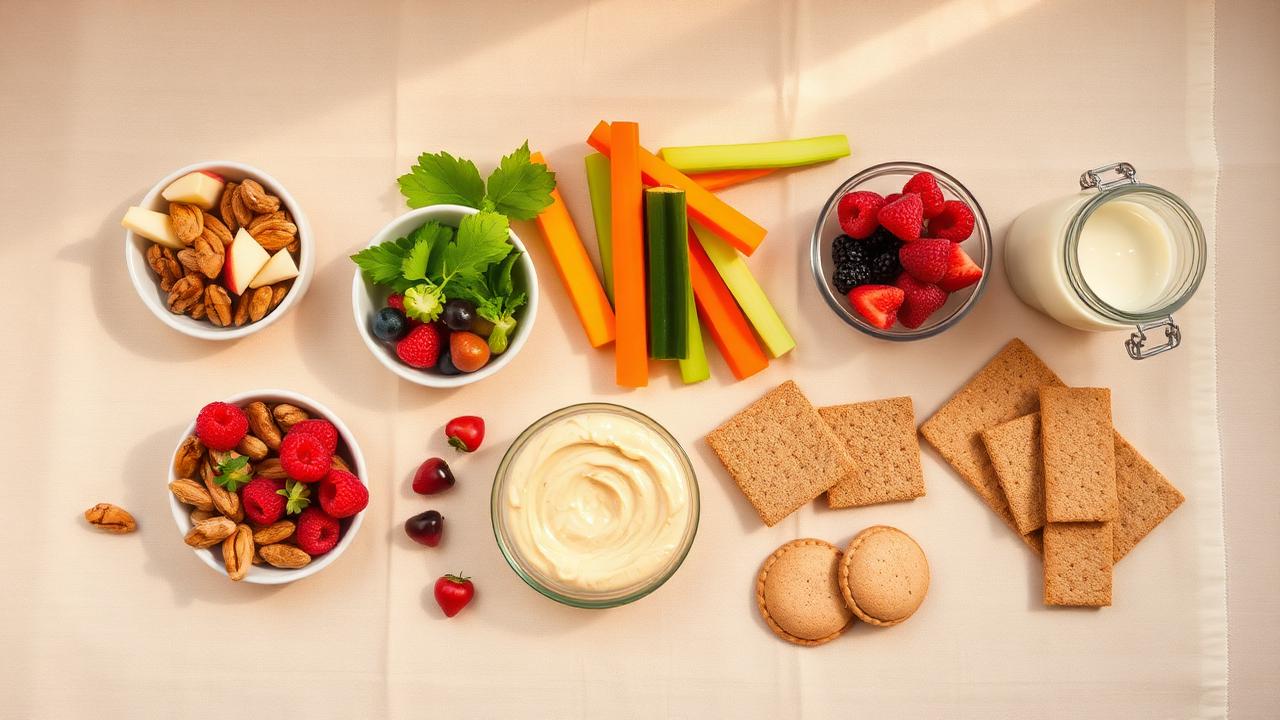
Pick a base such as yogurt, egg, tofu, cooked chicken or beans. Add fruit, vegetables or a modest bread portion depending on appetite and preference. This keeps the snack easy to repeat. Oil, nut butter, cheese, sauces and granola can be enjoyable additions, but a large amount changes the whole serving. There is no need to eliminate them; keep them intentional. Canada’s Food Guide supports a variety of protein foods within a broader eating pattern rather than requiring specialist bars at every eating occasion.
Protein and low-calorie claims are separate
Canadian nutrient claims have defined requirements, including specific criteria for protein and energy; see Health Canada’s permitted claims table. A substantial protein serving does not automatically qualify as low calorie. US rules also treat claims separately, but the applicable conditions should not be assumed identical across countries. For detailed comparisons, use our high-protein low-calorie label guide. This page gives food preparation ideas rather than invented nutrition numbers for homemade bowls.
25 ideas to explore
1. Yogurt and berry pot
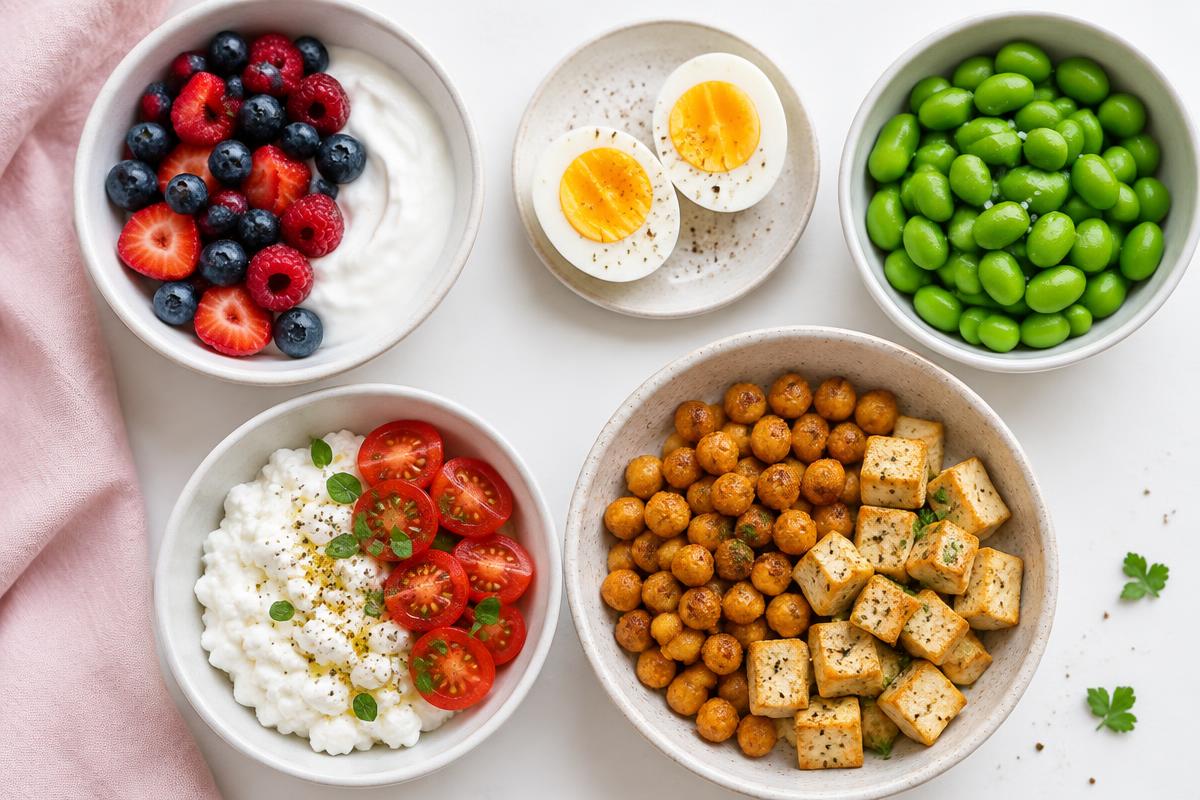
Spoon plain Greek yogurt into a container and pack berries separately if you prefer the texture fresh. Choose the yogurt by its label. Keeping a topping separate also makes it easier to see how much you are adding.
2. Cinnamon yogurt cup
Add a little cinnamon to plain yogurt for flavour without a heavy syrup. Cinnamon is a seasoning, not a glucose treatment. A simple cup is quick to prepare; keep refrigerated and use clean utensils when portioning from a large tub.
3. Cottage cheese and cucumber
Pack cottage cheese with chopped cucumber and herbs for a savoury option. Compare sodium between brands. Cucumber releases water, so combine close to eating or drain it lightly if you dislike a watery mixture.
4. Cottage cheese and peach
A modest amount of fresh or suitably drained peach can add sweetness to cottage cheese. Check syrup in canned fruit and portion according to appetite. Keep both components cold and avoid assuming fruit removes the need to read the cheese label.
5. Hard-boiled egg box
Cook eggs safely and pack one suitable portion with vegetables. A pinch of paprika or pepper can change the flavour without a sauce. Refrigerate and use a cold pack when carrying them for longer than safe unrefrigerated handling permits.
6. Egg-white vegetable bite
Use a reliable baked-egg recipe with egg whites and vegetables if you prefer that version. Do not invent cooking times for a new mould or filling. Follow safe cooking and storage guidance, and remember that additions determine the final nutrition.
7. Whole-egg mini frittata
A small frittata portion can use leftovers such as cooked vegetables. Cheese and oil affect energy and sodium, so keep the recipe clear. Cook thoroughly, refrigerate appropriately and reheat safely; a small shape does not make an egg dish shelf-stable.
8. Chicken cucumber box
Pair a modest portion of safely cooked chicken with cucumber and a small dip container. Leaving dip separate keeps texture and portion visible. Sweet glazes or large creamy dressings can change the combination more than a few extra vegetable pieces.
9. Turkey lettuce parcel
Use cooked turkey in a lettuce leaf for a quick savoury bite. Deli versions can be high in sodium, so compare the package. Pack neatly in a cold container rather than letting an open parcel sit in a warm work bag.
10. Tuna and tomato cup
Drain tuna and serve beside chopped tomato with lemon or herbs. Water-packed does not mean no salt added, so read the tin. Follow storage advice once opened and avoid adding an oversized mayonnaise portion by habit.
11. Salmon cucumber rounds
Top cucumber pieces with cooked salmon for a small prepared snack. Check salt and handling for smoked products if using them. Cucumber rounds are best assembled close to eating so the surface stays pleasant and the topping remains in place.
12. Chilled shrimp pot
Use properly cooked shrimp with a modest sauce or lemon portion. Sauce labels can reveal unexpected sugar or salt. Keep seafood safely chilled; the convenience of a ready-to-eat pot does not remove its storage requirements.
13. Plain edamame cup
Cook edamame as directed and portion shelled beans into a small container. Add a mild seasoning if you like. They contain protein along with carbohydrate and energy; describe the serving honestly rather than calling it calorie-free.
14. Tofu herb bowl
Use prepared tofu with a little herb and lemon dressing. Protein amounts vary with tofu type, so read the package. A large oily marinade changes the serving, and soy remains an allergen even in an otherwise simple bowl.
15. Baked tofu bites
Follow a trusted recipe for tofu pieces with a light coating or seasoning. The coating affects both texture and nutrition. Make a modest batch, cool and store safely, and do not assume home-baked bites keep like a commercial dry snack.
16. Lentil vegetable pot
Cook lentils and combine with vegetables for a chilled, savoury portion. Lentils provide protein and carbohydrate, making this different from a meat-only snack. A little lemon can add flavour; keep oil and salty sauce amounts intentional.
17. Chickpea cucumber salad
Mix cooked chickpeas with cucumber and herbs using a small measured dressing. Choose no-salt-added beans if sodium matters. This is a protein-containing combination, not proof that one serving meets a regulated high-protein claim.
18. White-bean lemon spread
Mash white beans with lemon and herbs, then pack beside vegetables or a small toast portion. A spread can be portioned ahead, while bread is best kept separate. Count all components if you need exact energy or carbohydrate information.
19. Yogurt-herb vegetable dip
Use plain Greek yogurt with herbs as a dip for peppers or carrots. Check the yogurt label for protein and sodium. A dip is often eaten repeatedly during preparation, so portion the amount you mean to use into its own container.
20. Edamame dip
Blend cooked edamame with a little water, lemon and suitable seasoning using a reliable recipe. This gives a different flavour from chickpea hummus. Keep chilled and account for oil or tahini additions rather than describing the bean alone.
21. Soy yogurt fruit bowl
Choose an appropriate soy yogurt and add fruit in a modest portion. Compare protein across brands instead of assuming all dairy-free yogurts are equivalent. Some contain little protein or considerable added sugar; the label supplies the answer.
22. Plain kefir bottle
A suitable unsweetened kefir portion can be packed as a drink snack. Check the actual bottle’s protein and energy values. Keep cold, and choose a solid option if a drink alone does not satisfy your hunger.
23. Yogurt and oat jar
Add a modest amount of oats to yogurt for a more substantial snack. This contributes carbohydrate and extra energy, which may be appropriate. Keep the jar cold and use its actual ingredients for calculations rather than borrowing numbers from another recipe.
24. Chicken on small toast
Use a bread portion and cooked chicken amount that fit your appetite. A sandwich snack can be more satisfying than repeated tiny bites. Keep perishable filling cold and compare bread and sauce labels if you need to assess the complete serving.
25. A label-checked protein drink
A ready-to-drink product may be convenient occasionally, but compare the entire serving, not just protein on the front. Some are substantial enough to resemble a small meal. Ingredients, sweetness, cost and whether you enjoy drinking it all deserve attention.
A small-batch routine for busy days
Prepare two protein bases rather than twenty-five finished snacks. For example, cooked eggs and a yogurt tub can support several combinations with ordinary produce. Use clean containers, label the preparation date and follow storage guidance for each food. Keep wet additions separate if texture matters. The Health Canada general food safety guidance is the source for safe handling principles. Do not leave dairy, cooked rice, eggs, fish or meat unrefrigerated simply because they are portioned as snacks.
Know what you are measuring
If you need exact values, weigh or measure the ingredients, use their labels or a reliable food-composition source, and calculate the whole portion. This article does not give guessed protein and calorie figures. If medical needs affect protein or energy targets, ask a dietitian or clinician. The companion comparison guide helps you evaluate labels; vegan ideas offer more plant-based combinations. A useful snack provides what you need and tastes good, rather than meeting a fashionable phrase at any cost.
A note from our kitchen
The useful preparation is the one you can repeat without turning a snack into a project. Keep one base and two toppings ready, then vary the combination. Clear ingredients and a comfortable portion are more valuable than a precise-looking nutrition number nobody has actually calculated.
— Flourish Snacks Bites
Looking for Nigerian snacks in Regina?
Flourish Snacks Bites makes Nigerian snacks for pickup or local delivery. This guide is general food information, not our product menu or a dietary certification.